Palače

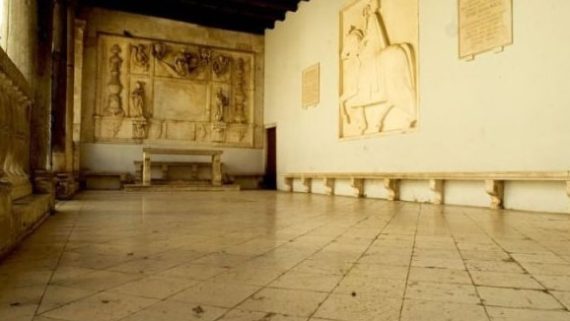
Loža i spomenik Petra Berislavića

U neposrednoj je blizini Muzeja grada Trogira. Nosi gotička stilska obilježja te je, do danas, imala djelomično sačuvana prozorska stakla sastavljena od okruglih komadića povezanih olovom. U njoj se rodio hrvatski ban i biskup Petar Berislavić, glasoviti borac protiv Turaka.

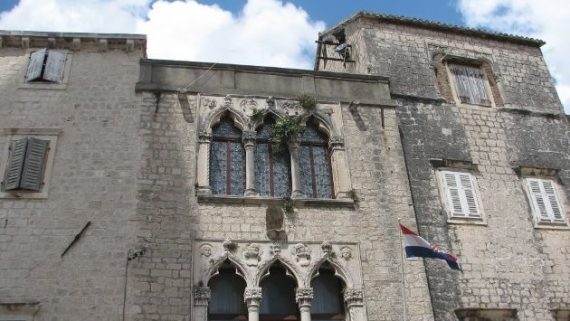
Palača Ćipiko

Čuveno zdanje nalazi se sučelice katedrali i loži. Palača je nastala povezivanjem romaničkih zgrada. Na pročelju velike palače je gotička trifora, djelo Andrije Alešija te vrata koja je isklesao Ivan Duknović. Južni portal radio je Nikola Firentinac, koji je radio i stepenište, vrata te reljef s likom Alviza Ćipika u maloj palači. Sklop palača je obnovljen u renesansi.
Palača Lucić

Legendarna građevina se nalazi na gradskoj rivi. Preuređena je tijekom 16. st. u renesansnom duhu, ali su pregradnje u 19. st. uništile njezin izvorni izgled. U njoj su živjeli glasoviti Petar Lucić (autor prve hrvatske pjesmarice starih pisaca – Vartal) te njegov sin, povjesničar Ivan, otac hrvatske historiografije.

Palače – Villa Queen

Trogir Palaces

Berislavic palace

The palace of Petar Berislavić is located in the area of the Town Museum decorated with Gothic characteristics and partially preserved window glass made of round pieces connected with the lead. It was also the birthplace of the Croatian governor and Bishop Petar Berislavić; famous for being one of the leaders against the Turkish invasions.

Cipiko palace

This magnificent structure is located opposite of the cathedral and loggia. It was built by the connecting of two Romanesque buildings. A gothic triple lancet window by Andrija Aleši, carved by Ivan Duknović, adorns the front of this big palace. The south portal was built by Nikola Firentinac who also built the staircase, doors and relief with the figure of Alviz Čipiko. The complex palaces were renovated in the the Renaissance period.

Lucic palace

This legendary building situated on the town waterfront – promenade. It was renovated during the 16th century in the Renaissance style. However, renovations in the 19th century ruined its original appearance. The famous Petar Lucić (the author of the first Croatian book of songs – Vartal) and his son Ivan (the father of Croatian historiography) used to live there.