Sakralna umjetnost

Pinakoteka

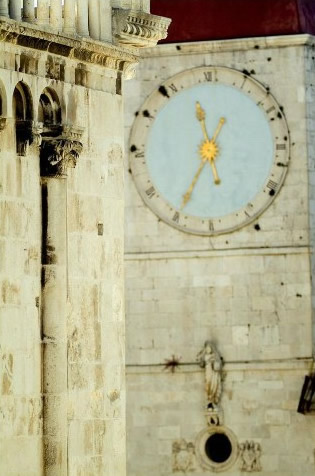
Zbirke sakralnih umjetnina, koja se nalazi se na Trgu pape Ivana Pavla II., čuva dragocjenu slikarsku i pisanu baštinu iz trogirskih i čiovskih crkava, djela Blaža Jurjeva Trogiranina, Quirizia da Murana, Gentile Bellinija itd. Do nje u zatvorenom dvorištu ostaci su šesterolisne crkve Sv. Marije iz 9. st. U neposrednoj blizini polovicom 15. stoljeća podignuta je zavjetna crkva sv. Sebastijana za spas od kuge koja umjesto zvonika ima toranj gradskog sata, a danas je spomen prostor poginulima u Domovinskom ratu.

Zbirka „Kairos“ i Samostan Sv.Nikole

Ovdje se čuva reljef s prikazom Kairosa, božanstva sretnog trenutka, IV./III. st. pr. Krista, te najstarija trogirska svetačka slika – Bogorodica s djetetom iz XIII. stoljeća. Crkva Sv. Nikole sastavni je dio jedinog sačuvanog ženskog benediktinskog samostana. Nastala je na temeljima starijih crkvica te južnih vrata antičkog grada sa stilskim obilježjima od romanike do baroka.

Sakralna umjetnost – Villa Queen
Sacred Art

The collection of sacral works of art

The collection of sacral works is located on the Square of Pope John Paul II and keeps the precious heritage from the churches of Trogir and Čiovo – the works of Blaž Jurjev Trogiranin, Quirizio da Muran, and Gentile Bellini. The remains of the hexagonal shape church of Saint Mary from the 9th century are held in a closed yard. The church of Saint Sebastian was built in the first half of the 15th century as a protection from the plague. Instead of a church tower there is the tower with a clock, and today it is the memorial for those who died in the Croatian Civil War.

Kairos collection

The marble relief of Kairos is kept in the Benediction monastery of Saint Nicholas. Kairos is a divine figure representing the right and opportune moment (4th and 3rd century B.C.). In the monastery there is also a sacred painting of the ‘Mother of God with Child’ from the 8th century.
The church of Saint Nicholas is the only preserved female Benedictine monastery in Trogir. It was built on the grounds of a smaller and older church and combined with the southern gate of the ancient town which has characteristics of the Romanesque period.