Znamenitosti
Grad znamenitosti
U prošlosti, grad je bio jedan od najvećih kulturnih centara Dalmacije: u 13. st. obogaćen je radovima majstora Radovana, koji ga je uresio čuvenim skulpturama. Radovanov Portal je završen u 1240. godini, monumentalno i jedinstveno djelo velikog hrvatskog umjetnika za kojeg natpis na bazi lunete kaže da je “u ovom umijeću od sviju najodličniji”.
Stara gradska jezgra je formirana između 13. i 15. stoljeća unutar obrambenog zida, a obnovila ju je Venecija u 15. stoljeću. Venecijanci su također dodali i dvije utvrde koje su još uvijek očuvane: Tvrđavu Kamerlengo i Kulu Sv Marka. Kula Kamerlengo se nalazi na jugozapadnom dijelu otoka. Današnji oblik je dobila u 15.stoljeću. Sjeverno je kula Sv. Marka iz 15. st. Između kule i tvrđave, iz vremena francuske okupacije, nalazi se gloriet građen u stilu klasicizma. Stariji, istočni dio grada razvio se oko glavnog trga s katedralom. Zapadni dio, Pasike, sagrađen je kasnije
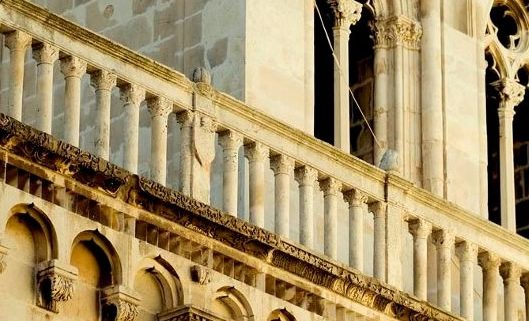
Ulaz u grad iz smjera sjevera je kroz renesansna gradska vrata iz 17. stoljeća s skulpturom Blaženog Ivana Orsinija, sveca zaštitnika grada. Na glavnom gradskom trgu nalazi se i katedrala građena od 13. do 15. stoljeća s karakteristikama i romaničkog i gotičkog stila. Ulaz katedrale krasi najvrijedniji umjetnički rad romaničkog perioda u Dalmaciji – portal majstora Radovana iz 1240.
Najljepši predmeti iz riznice su izlošci izvezenog platna, bjelokosni gotički triptih i srednjovjekovni oslikani kodeksi. Skulptura Sv. Lovre i trokutasti zabat su dodani na portal u 14. stoljeću. U katedrali su također: krstionica iz 1464, rad kipara Andrije Alešija; osmerokutna kamena propovjedaonica iz 13. stoljeća; gotičke klupe za kor; ciborij iz 14 st.; slike lokalnih i talijanskih majstora; gotička kapela Sv. Jeronima iz 1438; i kapela Blaženog Ivan Ursinija – najljepši spomenik renesanse u Dalmaciji, rad Nikole Firentinca, Ivana Duknovića i Andrije Alešia iz 15. stoljeća.
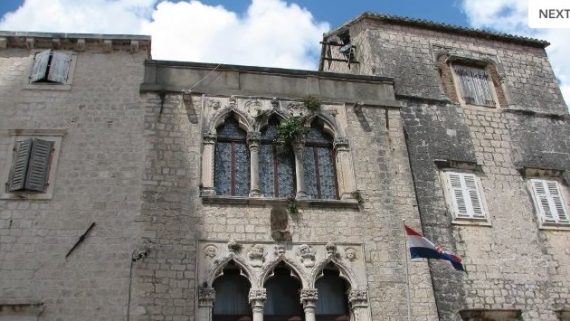
Na glavnom gradskom trgu je gradska loža iz 14. stoljeća, toranj sa satom, te crkvica Sv. Sebastijana koja je sagrađena u renesansnom stilu. Mala ranosrednjovjekovna crkva Sv. Barbare, građena od 9. do 10. stoljeća, nalazi se iza lože i to je najstarija crkva u Trogiru. Trg je zatvoren sa strane Palačom Ćipiko. Nasuprot palače je gradska vijećnica iz 15. stoljeća. Romanička crkva Sv. Ivana Krstitelja iz 13. stoljeća, s ostacima srednjovjekovne freske i sa grobom obitelji Ćipiko, nalazi se tik uz vijećnicu, na obodu trga. Dalje prema obali je dio sačuvanih zidina s obrambenom kulom i ostacima renesansnih gradskih vrata iz 1593.